


A printed banner does its job once. Someone glances at it, maybe reads it, and moves on — and it says the exact same thing until you pay to replace it. An indoor LED display doesn’t have that problem. Change the offer at 9 AM, change it again by lunch, and the screen never needs a reprint. That’s the shift happening right now across showrooms, lobbies, and store counters in metro cities like Delhi, Noida, Gurgaon, Mumbai, Bengaluru, etc.
The harder question isn’t whether to get one. It’s getting the size, brightness, and pixel pitch right for the room you actually have — because an indoor LED display bought for the wrong space either looks washed out or costs more than it needed to. This guide covers what an indoor LED display is, where it earns its keep, and what to check before you sign a purchase order.
What Is an Indoor LED Display?
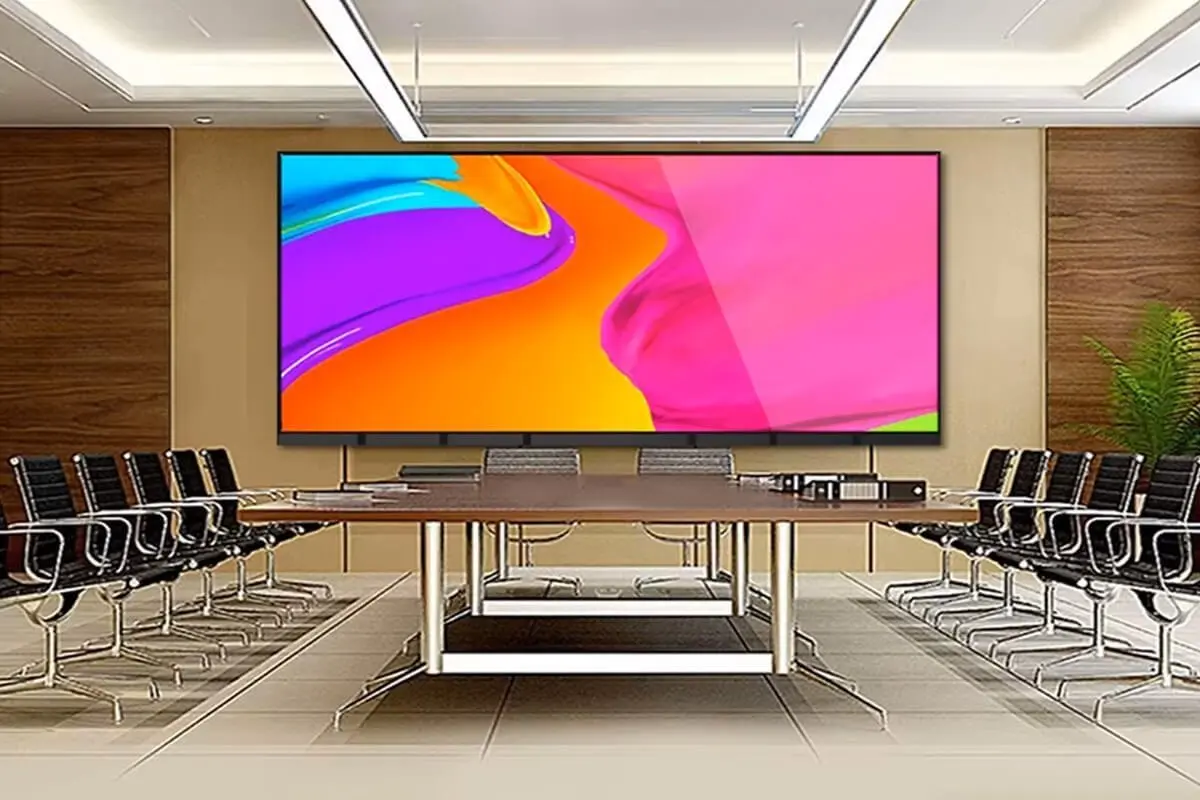
It’s a digital screen built from LED modules packed tightly enough to look sharp from a few feet away, running at brightness levels tuned for a room, not for sunlight. That’s the key difference from an outdoor LED screen: indoor panels use a finer pixel pitch and far lower brightness, because they’re not fighting daylight for visibility.
Where you’ll typically find them:
- Retail storefronts and in-store promo walls
- Corporate lobbies and reception branding
- Restaurant and QSR menu boards
- Bank and NBFC branches
- Hotel lobbies and event venues
- Control rooms and command centers
- Auto, real estate, and electronics showrooms
Why Businesses Are Switching to Indoor LED Displays
Content changes in seconds, not days
Print means reprinting every time a price or offer changes. A store manager updates an LED display from a laptop or tablet in the time it takes to type the new number — no vendor, no wait.
It gets noticed more than a static poster
Motion and brightness pull the eye in a way flat print doesn’t. This isn’t a hunch — digital signage research consistently shows dynamic content beats static print on recall, which is exactly why retail and hospitality brands keep shifting ad budget toward screens.
The cost per impression drops over years
Yes, an LED wall costs more upfront than a printed banner. But the banner needs replacing every few months while the screen keeps running for years across thousands of impressions. Do that math over three to five years and the LED display usually wins.
Sharper up close, where it matters
Indoor viewers stand closer than outdoor ones — at a checkout counter, a few feet from a reception desk. That’s why pixel pitch matters more indoors: a finer pitch (P1.5–P2.5) holds up to close scrutiny in a way a coarser outdoor panel never would.
Indoor LED Display vs Outdoor LED Display vs LCD Screen
| Feature | Indoor LED Display | Outdoor LED Display | Commercial LCD/LED TV |
| Ideal pixel pitch | P1.2 – P3 | P4 – P10 | Fixed panel resolution |
| Brightness | 600–1200 nits | 4000–8000+ nits | 350–500 nits |
| Viewing distance | Close (1m+) | Far (5m+) | Close to mid-range |
| Weatherproofing | Not required | IP65 rated | Not required |
| Best use case | Retail, lobbies, showrooms | Billboards, building facades | Small meeting rooms, budget signage |
| Screen size flexibility | Modular, scalable | Modular, scalable | Fixed panel sizes only |
| Typical lifespan | 80,000–100,000 hours | 80,000–100,000 hours | 30,000–60,000 hours |
The gap that matters most: an indoor LED display scales to a full wall with no visible seams and no drop in image quality. An LCD hits a ceiling — tile a few of them together and you’re staring at bezels.
Choosing the Right Pixel Pitch for Your Space
Short version: the closer your audience stands, the finer the pitch needs to be.
- P1.2 – P1.8: Boardrooms, control rooms, high-end retail — people are standing within 1-2 meters
- P1.9 – P2.5: Retail stores, lobbies, showrooms — this covers most standard indoor installs
- P3 – P4: Auditoriums, banquet halls, exhibition floors — viewers are further back, so you don’t need the finer (and pricier) pitch
Rough rule that holds up in practice: minimum viewing distance in meters roughly equals the pixel pitch in millimeters. A P2.5 screen starts looking sharp from about 2.5 meters out.
Also Read: Indoor vs Outdoor LED Display: How to Choose the Right Screen
How Much Does an Indoor LED Display Cost?
We won’t throw a number at you here, because a single figure would be misleading — pixel pitch, panel brand, screen size, and installation complexity all move the price, and a generic per-square-foot number you find online rarely matches what you’ll actually pay. What we can tell you: finer pixel pitches cost more per panel because the LEDs sit closer together and the driver boards get more complex. Get a quote based on your actual space and content plan rather than anchoring to a number from a blog post — including this one.
What to Check Before Buying an Indoor LED Display
- Panel brand and chip quality — this is what determines color accuracy and how long the panel lasts before it starts dimming unevenly
- Refresh rate — anything below roughly 1920Hz can flicker on camera, which matters if the screen will ever show up in photos or video
- Cabinet type — die-cast aluminum cabinets are lighter and easier to service than the older iron ones
- Serviceability — check whether maintenance happens from the front or the back; it affects how much space you need to leave behind the wall
- Installer’s after-sales support — the panel is only half the product; who fixes it in year three matters just as much
Where This Actually Gets Used
- Retail chains run entrance-facing LED walls that rotate promotions on their own, no staff needed to swap anything.
- Auto showrooms in Mumbai and Bengaluru are increasingly putting large LED walls behind the vehicles on display, using them for brand storytelling rather than just specs.
- Corporate offices in Noida and Gurgaon use lobby video walls for visitor branding and, in some cases, live dashboards.
- Banquet halls and hotels lean on indoor LED screens for event branding and live-streaming during conferences.
We’ve been building and installing these systems since 2015, and the pattern holds across every sector we’ve worked in: businesses that plan their LED display as a communication tool — not just a screen to fill a wall — get noticeably more out of it than ones that treat it as an afterthought.
Conclusion
An indoor LED display earns its cost by doing something print never could: updating instantly and holding attention longer, whether it’s mounted at a retail counter in Delhi or a corporate lobby in Bengaluru. Get the pixel pitch, brightness, and cabinet quality wrong, though, and you’re looking at a replacement in two years instead of a decade of use.
Lumn Lab has been manufacturing and installing LED display solutions since 2015, working directly with retail brands, corporates, and hospitality venues across India.
If you’re weighing an indoor LED display for your business, get in touch with Lumn Lab for a free consultation and a display recommendation built around your actual space and viewing conditions.
Frequently Asked Questions
Q1. What is an indoor LED display used for?
Advertising, branding, wayfinding, and general information display in enclosed spaces — retail stores, lobbies, showrooms, event venues. It replaces static posters and banners with content you can update on the fly.
Q2. How is an indoor LED display different from an outdoor one?
Indoor displays use a finer pixel pitch and much lower brightness (600–1200 nits) since there’s no sunlight to compete with. Outdoor displays need 4000+ nits and IP65 weatherproofing to survive outside and stay visible in daylight.
Q3. Which pixel pitch is best for a retail store?
P1.9 to P2.5 covers most retail spaces, where customers view the screen from roughly 2-5 meters away. Smaller boutique counters with closer viewing can go down to P1.5.
Q4. How long does an indoor LED display last?
Around 80,000 to 100,000 operating hours with quality components — roughly 8-10 years of daily use if it’s maintained properly.
Q5. Is an indoor LED display expensive to maintain?
Not usually, if the panels use decent components and a serviceable cabinet. Maintenance is mostly dust cleaning and periodic checks on the control system rather than frequent part swaps.
Q6. Can an indoor LED display be customized in size and shape?
Yes — the panels are modular, so they combine into custom sizes and even curved or irregular shapes for columns, arches, or reception counters.
Q7. What is the difference between an indoor LED display and a commercial LCD screen?
An LED display scales to large sizes with no visible seams. An LCD screen is stuck at fixed panel sizes, and tiling several together for a bigger display leaves visible bezels between them.
Q8. How do I choose an indoor LED display manufacturer in India?
Look past panel price to the full picture: manufacturing, installation, and after-sales support under one roof. Ask about warranty terms, refresh rate specs, and actual past installations in your industry — not just a spec sheet.
Keep Reading