


Walk into any modern shopping mall, airport, corporate office, or even a neighbourhood cafe, and you’ll notice one thing they all have in common – digital displays are everywhere. Businesses are moving beyond traditional printed signage because customers expect information that’s timely, engaging, and easy to understand. That’s exactly where a Digital Display System makes a difference.
Whether it’s promoting a new product, displaying live announcements, guiding visitors through a building, or creating eye-catching advertising campaigns, a digital display system gives businesses the flexibility to update content instantly without the recurring cost of printing new signage. It’s a smarter, more efficient way to communicate with customers while building a stronger brand presence.
As organizations across India continue to invest in digital transformation in 2026, choosing the right display solution has become just as important as choosing the right marketing strategy. Since 2015, Lumn Lab has been helping businesses across retail, corporate, education, healthcare, hospitality, and other industries deliver impactful visual communication through reliable, high-performance LED display solutions tailored to their unique requirements.
What Is a Digital Display System?
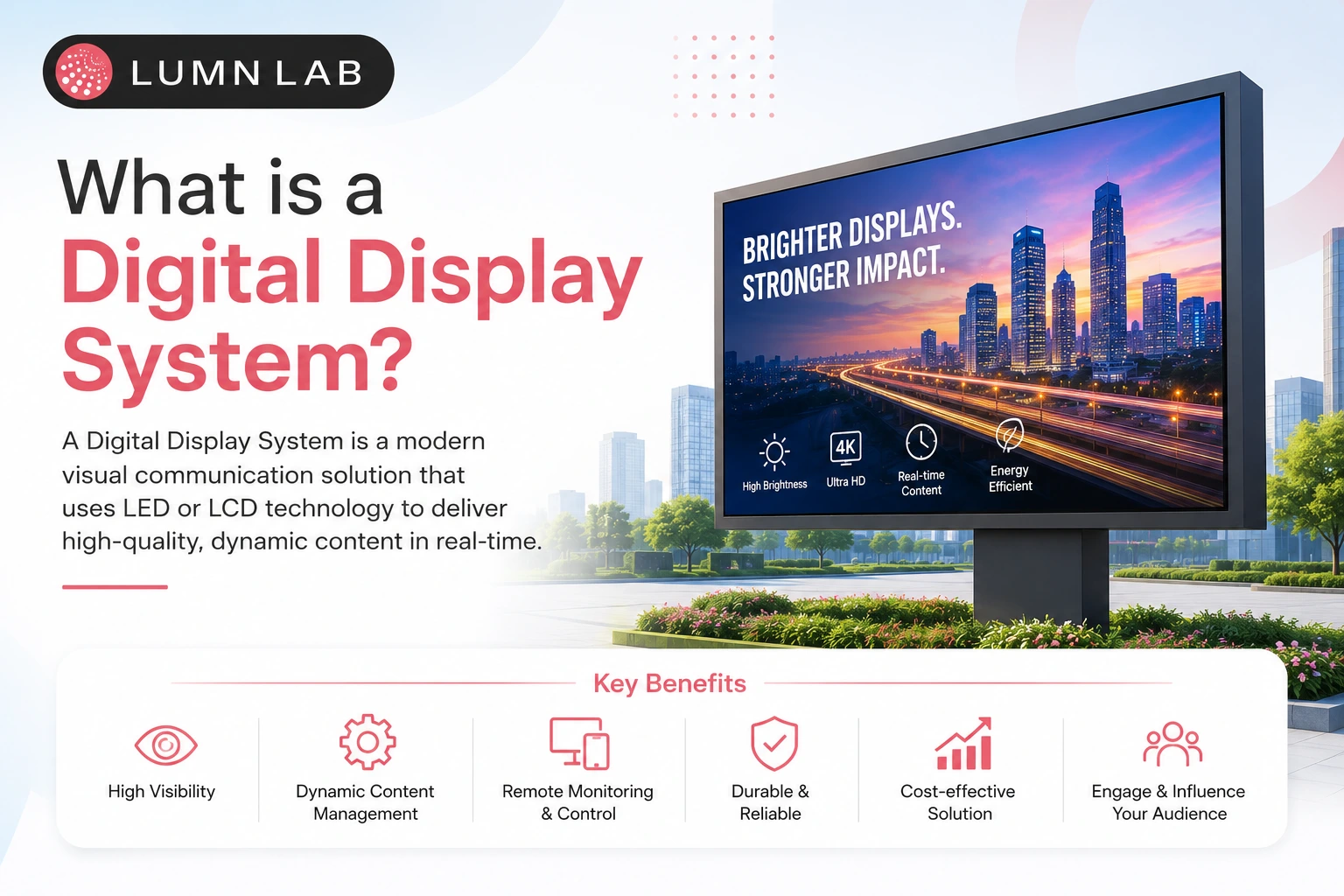
A Digital Display System is a digital screen that allows businesses to display and manage content such as advertisements, videos, announcements, directions, menus, dashboards, and live updates. Instead of relying on printed posters that need to be replaced every time a promotion changes, businesses can update content in just a few clicks.
You’ll find digital display systems in shopping malls showcasing new collections, airports sharing flight information, hospitals managing patient queues, restaurants displaying digital menus, and corporate offices communicating with employees. The ability to update information instantly makes them far more practical than traditional signage.
A standard digital display system usually consists of:
- LED or LCD display screen
- Media player
- Content Management System (CMS)
- Internet or network connection
- Mounting structure and power supply
Each component works together to deliver smooth, high-quality content exactly when and where it’s needed.
Why Are Digital Display Systems Becoming Essential in 2026?
Customer expectations have changed. People expect information to be clear, visual, and available in real time. Whether it’s a retail promotion, an event schedule, or a safety announcement, businesses need a faster way to communicate than printed banners can offer.
That’s why more organizations are switching to digital display systems.
A modern digital display system helps businesses:
- Update content instantly without reprinting signage.
- Capture attention with videos, animations, and dynamic visuals.
- Manage multiple displays from one central location.
- Improve customer engagement with timely and relevant content.
- Reduce long-term printing and maintenance costs.
- Maintain a consistent brand experience across multiple locations.
Industry reports continue to show strong growth in the global digital signage market as businesses invest in smarter display technologies, cloud-based content management, and AI-powered automation. For organizations planning long-term growth, digital displays are quickly becoming a standard business investment rather than a luxury.
Types of Digital Display Systems
Not every business needs the same type of display. The right choice depends on where the screen will be installed, how far viewers will be standing, and the kind of content you want to display.
| Display Type | Best For | Why It’s a Good Choice |
| Indoor LED Display | Retail stores, malls, offices | Bright visuals with excellent image quality |
| Outdoor LED Display | Billboards, stadiums, highways | Weather-resistant with high brightness for daylight visibility |
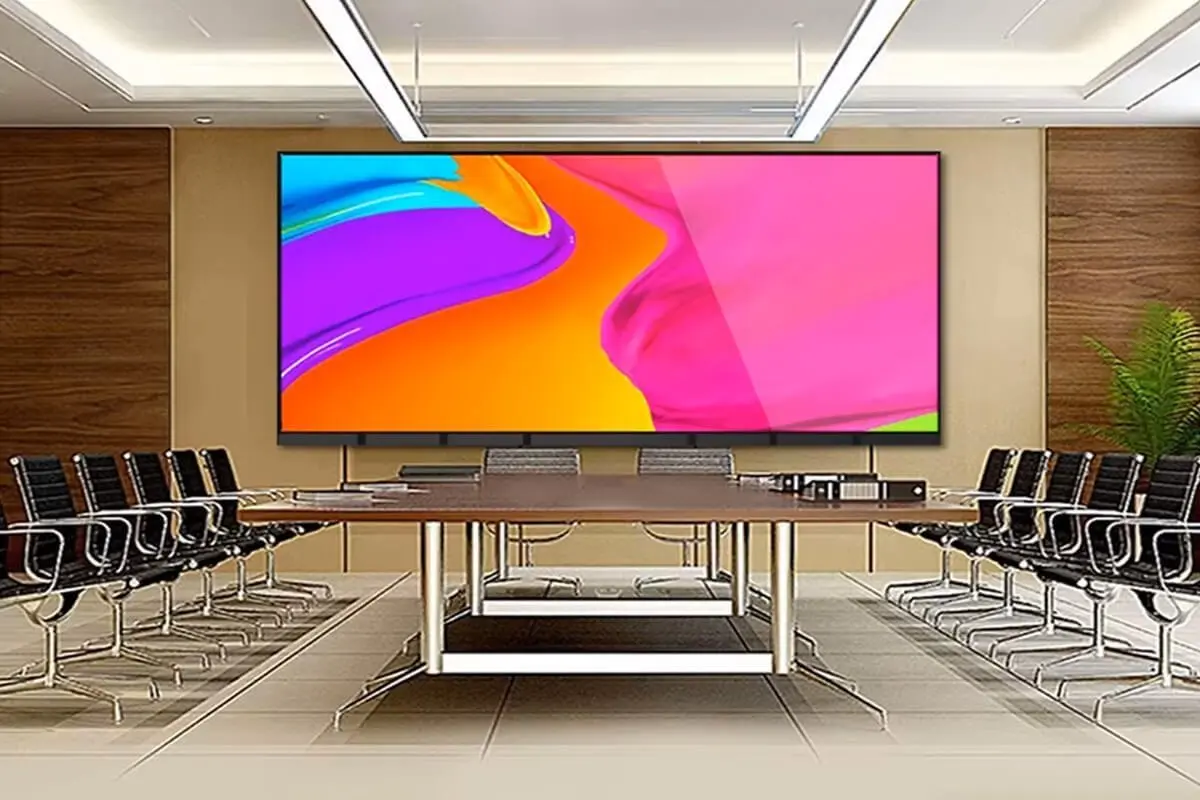
| LED Video Wall | Corporate lobbies, events, control rooms | Creates a seamless large-screen viewing experience |
| Interactive Display | Schools, exhibitions, experience centres | Allows users to interact with the content |
| Digital Menu Board | Restaurants, cafés, food courts | Makes updating prices and promotions simple |
| Information Display | Hospitals, airports, railway stations | Displays live schedules, directions, and announcements |
How Does a Digital Display System Work?
One of the biggest advantages of a digital display system is how easy it is to manage. Once everything is set up, updating your content takes only a few minutes.
Here’s how it works:
- Create your content, whether it’s a video, image, announcement, or promotional offer.
- Upload it to a Content Management System (CMS).
- Schedule when the content should appear.
- The media player sends the content to the display screen.
- The LED display shows it automatically.
- Need to make a change? Simply update the content remotely without visiting the location.
For businesses managing multiple branches or franchises, this means every screen can be updated from a single dashboard, saving both time and operational effort.
Key Features to Look for in a Digital Display System
Not all digital display systems offer the same level of performance. Before making an investment, it’s worth checking a few specifications that directly affect viewing quality and long-term reliability.
High Brightness
A brighter display stays visible even under strong indoor lighting or direct sunlight, making it ideal for outdoor advertising and storefront displays.
Sharp Image Quality
The right pixel pitch and screen resolution ensure your content looks crisp, whether customers are standing a few feet away or viewing it from across a large venue.
Energy Efficiency
Modern LED displays consume less power than older technologies while delivering brighter and more vibrant visuals, helping businesses reduce operating costs over time.
Remote Content Management
Cloud-based software allows you to update one display or hundreds of displays from a single location, making content management simple and efficient.
Long Service Life
A well-built LED display can typically operate between 50,000 and 100,000 hours with proper maintenance, making it a long-term investment for businesses.
Flexible Installation Options
Digital display systems are available in a variety of shapes and sizes, making it possible to install them on walls, pillars, curved surfaces, storefronts, conference rooms, and outdoor structures.
Industries Using Digital Display Systems
Almost every industry relies on digital displays to improve communication and customer engagement.
Retail
Retail stores use digital displays to promote new arrivals, seasonal offers, product launches, and window advertisements that attract shoppers.
Corporate Offices
Companies use display screens for meeting room schedules, employee announcements, visitor information, and business performance dashboards.
Healthcare
Hospitals and clinics improve patient experiences by displaying queue numbers, appointment information, health awareness campaigns, and emergency notifications.
Education
Schools, colleges, and universities use digital displays for campus announcements, classroom information, event promotions, and interactive learning.
Hospitality
Hotels, restaurants, and cafés rely on digital displays for menus, event schedules, welcome messages, and wayfinding.
Transportation
Airports, railway stations, and bus terminals depend on digital display systems to share live schedules, arrival updates, departure information, and public announcements.
Entertainment & Events
Concerts, sports stadiums, exhibitions, and live events use large LED screens to broadcast live footage, scores, event information, and sponsor advertisements.
Digital Display System vs Traditional Signage
While printed signage still has its place, businesses that regularly update information often find digital displays more efficient in the long run.
| Feature | Digital Display System | Traditional Signage |
| Content Updates | Instant | Requires printing new materials |
| Multimedia Support | Videos, animations, images | Static graphics only |
| Remote Management | Yes | No |
| Customer Engagement | High | Limited |
| Long-Term Cost | Lower over time | Ongoing printing costs |
| Performance Tracking | Available with digital platforms | Not available |
How to Choose the Right Digital Display System
There’s no one-size-fits-all solution. The right digital display depends on your business goals and the environment where it will be installed.
Before making a decision, consider:
- Will the display be used indoors or outdoors?
- How far away will people view the screen?
- What screen size is suitable for your space?
- Which pixel pitch delivers the best viewing experience?
- How bright does the display need to be?
- What type of content will you show most often?
- What’s your available budget?
- Does the supplier provide installation, maintenance, and after-sales support?
Working with an experienced LED display manufacturer helps ensure you invest in the right technology instead of paying for features your business doesn’t actually need.
Why Businesses Choose Lumn Lab
A digital display is a long-term investment, so choosing the right partner matters just as much as choosing the technology itself.
Since 2015, Lumn Lab has been helping businesses across India design and implement LED display solutions that match their operational requirements and communication goals. Rather than offering a standard product for every project, the team focuses on recommending solutions based on the installation environment, viewing distance, content requirements, and budget.
Businesses work with Lumn Lab because of its:
- Customized LED display solutions
- High-quality display components
- Expert consultation and planning
- Professional installation support
- Reliable after-sales service
- Experience across retail, healthcare, education, hospitality, corporate, and public infrastructure projects
Whether your project is in Delhi NCR, Mumbai, Bengaluru, Hyderabad, Chennai, Pune, Ahmedabad, Kolkata, or anywhere else in India, Lumn Lab delivers scalable LED display solutions designed to help businesses communicate more effectively.
Conclusion
A Digital Display System has become an essential part of how modern businesses communicate. Whether it’s attracting customers, sharing real-time information, improving the visitor experience, or strengthening brand visibility, the right display solution helps businesses deliver the right message at the right time.
The key is choosing a system that matches your business goals, installation environment, and future growth plans. A well-designed LED display isn’t just an investment in technology—it’s an investment in better communication and long-term business value.
Since 2015, Lumn Lab has been helping businesses across India design and implement customized LED display solutions for retail, corporate offices, healthcare, education, hospitality, public infrastructure, and more. With industry expertise, quality products, and dedicated support, the team works closely with every client to deliver solutions that perform reliably for years to come.
Planning to invest in a Digital Display System? Get in touch with Lumn Lab for expert guidance and customized LED display solutions tailored to your business needs.
Find the Perfect Digital Display System for Your Business
From indoor LED displays and outdoor billboards to video walls and interactive digital signage, Lumn Lab designs and delivers customized display solutions that maximize visibility, engagement, and long-term value.
Frequently Asked Questions
What is a digital display system?
A digital display system is a screen-based communication solution that allows businesses to display videos, images, advertisements, announcements, live updates, and other digital content. Unlike traditional printed signage, the content can be updated instantly through software, making it a flexible and cost-effective option for businesses of all sizes.
What are the advantages of a digital display system?
A digital display system offers much more than attractive visuals. It allows businesses to update content in real time, engage customers with dynamic media, reduce printing costs, manage multiple screens remotely, and deliver consistent brand messaging across different locations. Over time, it also proves to be more cost-effective than frequently replacing printed signage.
Which industries use digital display systems?
Digital display systems are used across a wide range of industries, including retail, healthcare, education, hospitality, transportation, manufacturing, corporate offices, government organizations, entertainment venues, and public spaces. Any business that needs to communicate information clearly and quickly can benefit from digital display technology.
What is the difference between LED displays and LCD displays?
While both technologies display digital content, they serve different purposes. LED displays are brighter, more durable, and easier to scale, making them ideal for large indoor and outdoor installations. LCD displays are generally better suited for smaller indoor applications where viewing distances are shorter and screen sizes are more compact.
How long does a digital display system last?
A high-quality LED display can typically operate for 50,000 to 100,000 hours, depending on how it’s used and maintained. Regular servicing, proper installation, and suitable operating conditions can help maximize its lifespan and ensure consistent performance.
Can digital display systems be managed remotely?
Yes. Most modern digital display systems come with cloud-based content management software that allows businesses to update, schedule, and monitor content remotely. This is especially useful for companies managing multiple displays across different branches or cities.
How do I choose the right digital display system?
The right system depends on your business goals and installation environment. Consider factors such as whether the display will be used indoors or outdoors, the viewing distance, screen size, pixel pitch, brightness requirements, content type, and your available budget. Partnering with an experienced LED display manufacturer like Lumn Lab can help you select a solution that fits your specific requirements instead of paying for features you don’t need.
Why should businesses invest in digital display systems in 2026?
As customers increasingly expect fast, engaging, and visually appealing communication, digital display systems have become an important business tool. They help improve customer engagement, simplify content management, reduce recurring signage costs, and create a more professional brand experience. For businesses planning long-term growth, investing in a digital display system is a practical way to stay competitive in an increasingly digital marketplace.
Keep Reading