


If you’ve ever stood at the back of a wedding hall squinting at a 55-inch TV trying to make out the couple’s photo montage, you already know why LED screens took over the event industry. A good LED screen for events isn’t just bigger — it holds its brightness under stage lighting, handles direct sun at outdoor venues, and doesn’t wash out from an angle the way a projector screen does.
But “get an LED screen” isn’t a single decision. Pixel pitch, panel type, rental versus purchase, indoor versus outdoor rating — each choice changes your budget and your setup timeline. This guide walks through what actually matters when you’re picking an event LED display, what it costs in India right now, and what a typical install looks like on the day.
What Is an LED Screen for Events?
An LED screen for events is a modular video wall built from individual LED panels — usually 500mm x 500mm or 500mm x 1000mm — that lock together to form one large, seamless display. Unlike a single TV panel, event LED walls can be built to almost any size or shape: a 20-foot backdrop for a product launch, a curved screen behind a stage, or a floor-standing display at a trade show booth.
The panels run on a control system (a video processor plus a sending card) that syncs content across every module, so the whole wall plays as one continuous image rather than a grid of separate screens.
Types of LED Screens Used at Events
Not every event needs the same panel. Here’s how the main types break down:
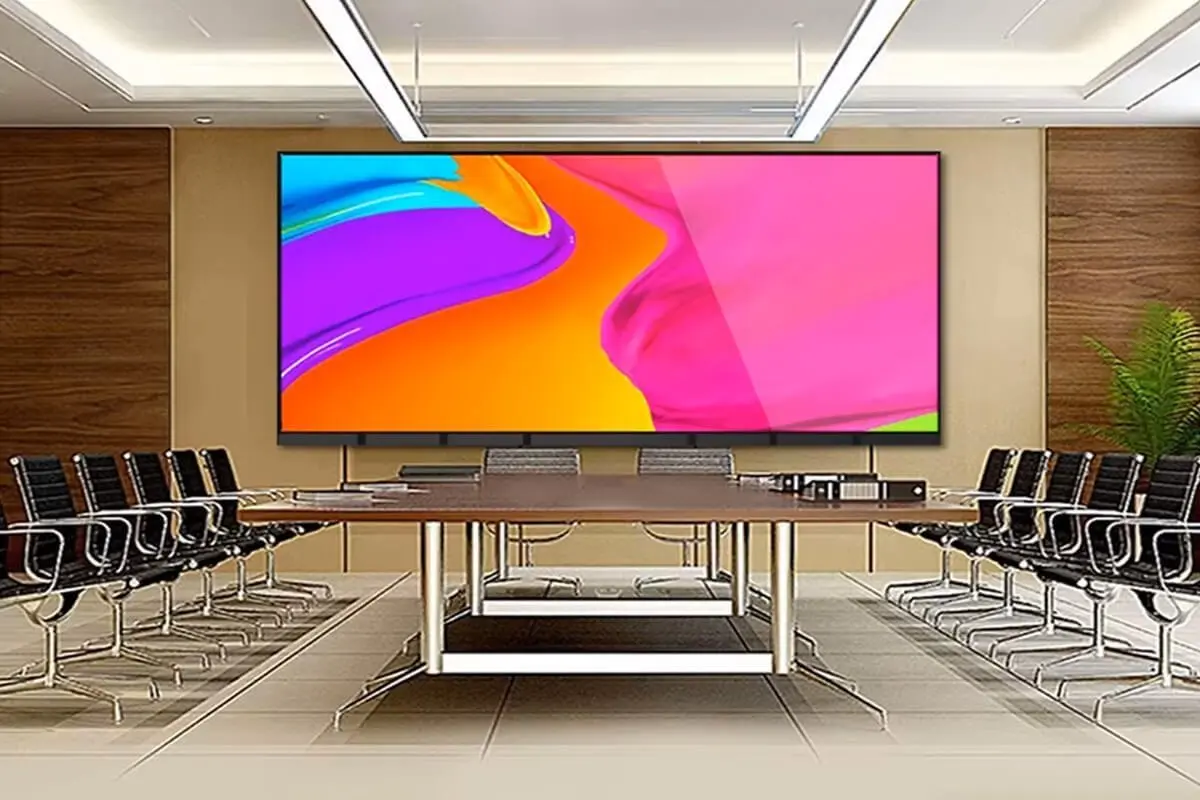
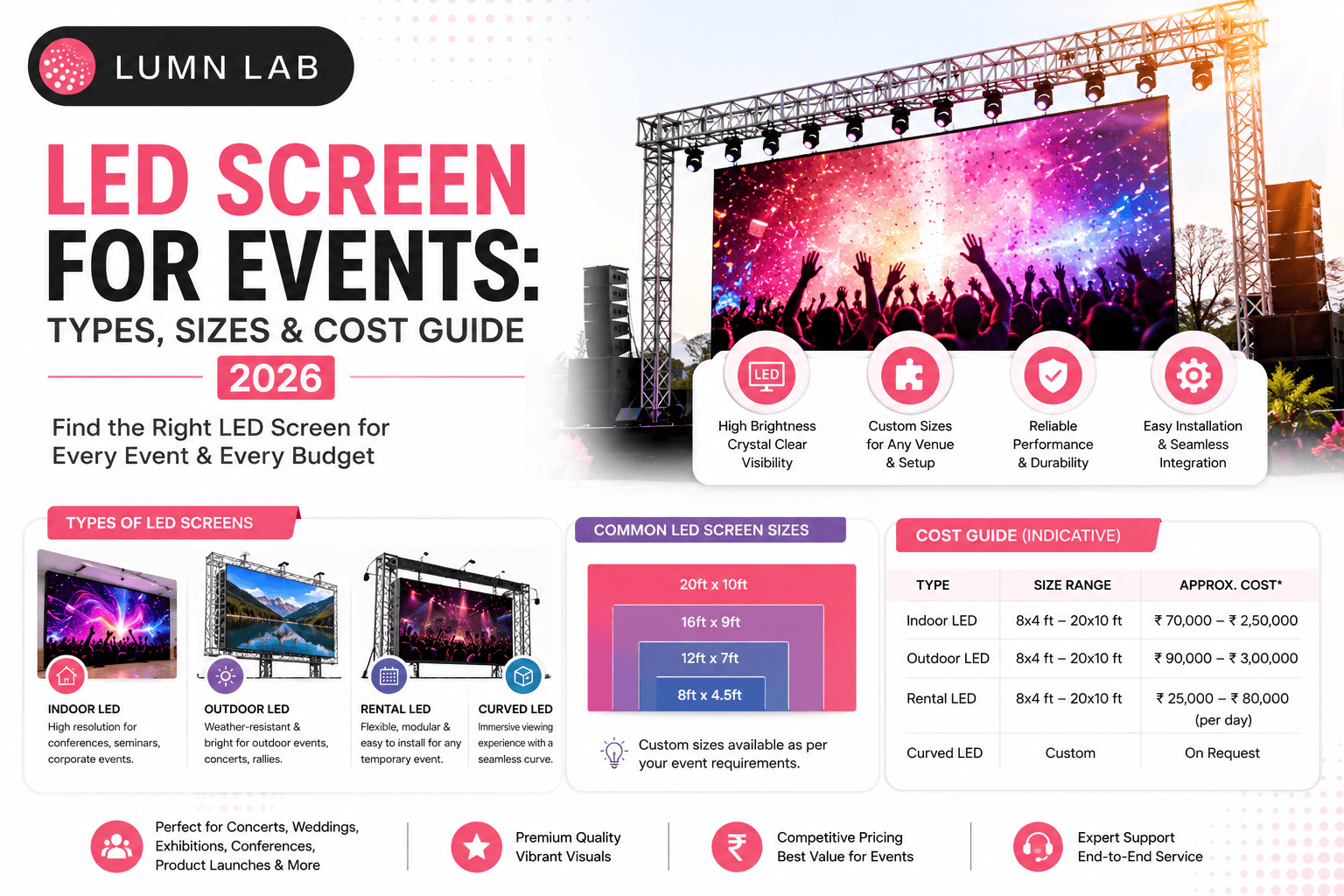
Indoor LED Screens: Built for controlled lighting environments — banquet halls, auditoriums, corporate offices. These typically use a tighter pixel pitch (P2.5 to P4) since viewers sit closer, and they don’t need weatherproofing, which keeps them lighter and easier to rig.
Outdoor LED Screens: Rated IP65 or higher to handle rain, dust, and direct sunlight. They push higher brightness — often 5,000 to 8,000 nits — so the image stays visible at noon. Outdoor screens are the standard choice for stadium concerts, political rallies, and open-air weddings.
Rental LED Panels: Designed for frequent assembly and disassembly. Rental panels use die-cast aluminum cabinets with quick-lock connectors, so a crew can build and strike a wall in hours instead of days. If you’re renting for a single event rather than buying for repeat use, this is the category you want.
Flexible / Curved LED Screens: Bendable panels used for creative stage backdrops, cylindrical booths, or logo walls that need to wrap around a structure rather than sit flat.
Transparent LED Screens: See-through glass-mounted panels, mostly used at retail launches and exhibitions where the screen needs to sit in a storefront window without blocking the view behind it.
LED Screen Sizes for Events: What’s Standard
Screen size for an event usually comes down to venue size and viewing distance, not a fixed standard. That said, a few sizes come up repeatedly:
| Event Type | Typical Screen Size | Recommended Pixel Pitch |
| Wedding stage backdrop | 12ft x 8ft to 20ft x 10ft | P3 – P4 |
| Corporate conference | 10ft x 6ft to 16ft x 9ft | P2.5 – P3 |
| Trade show booth | 8ft x 6ft to 12ft x 8ft | P2.5 – P4 |
| Outdoor concert/rally | 20ft x 12ft and up | P5 – P8 |
| Product launch backdrop | 10ft x 6ft to 15ft x 8ft | P2.5 – P3 |
Rule of thumb on pixel pitch and distance: the closer your audience sits, the tighter the pixel pitch needs to be. As a working guide, multiply the pixel pitch (in mm) by roughly 3 to get the minimum comfortable viewing distance in meters. A P4 screen, for instance, holds up well from about 4 meters back — fine for a banquet hall, tight for a front-row wedding table.
LED Screen for Events: Cost Factors
Rental and purchase pricing both depend on the same core variables:
- Pixel pitch — tighter pitch (more LEDs per panel) costs more
- Screen area — priced per square foot in most rental quotes
- Indoor vs. outdoor rating — outdoor panels cost more due to weatherproofing and higher brightness
- Rental duration — single-day rates differ from multi-day event packages
- Setup and logistics — rigging, technician deployment, and transport, especially for venues outside major cities
- Content and operation — whether you need a technician to run playback during the event, or just the hardware
Exact rental rates vary widely by city, panel brand, and vendor, so treat any number you see online as a starting point for negotiation rather than a fixed price. The most reliable way to budget is to get a quote against your actual screen size, pixel pitch, and event dates — costs shift enough by season and location that a generic figure isn’t much use for planning.
How to Set Up an LED Screen for an Event: Step by Step
A typical LED wall install for an event follows this sequence:
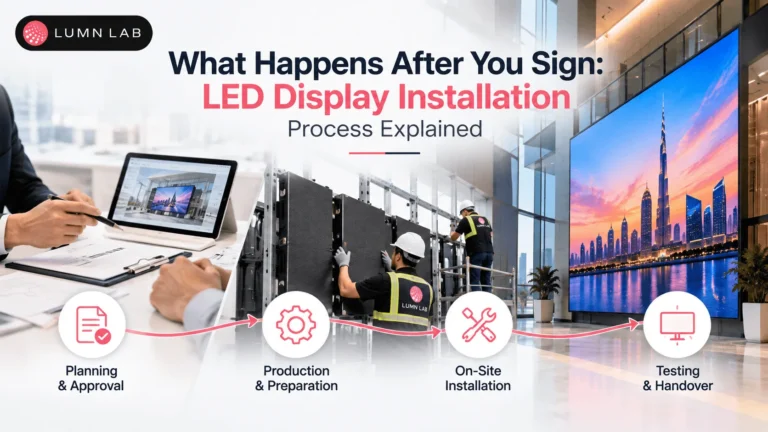
- Site survey — the vendor checks venue dimensions, power availability, and rigging points (truss, ground stack, or wall mount) before the event date.
- Structure build — a ground-support frame or truss system is assembled to hold the panel weight.
- Panel mounting — individual LED cabinets are locked into the frame, cabled, and aligned for a flush seam between panels.
- Control system setup — the sending card and video processor are connected and calibrated so brightness and color match across every panel.
- Content test run — the technical team runs your actual event content (slides, video, live feed) through the wall to check color accuracy and sync before doors open.
- Live operation — for events with a live feed, presentations, or a run-of-show, a technician typically stays on-site to switch content and troubleshoot in real time.
- Strike-down — panels are disassembled and packed at the end of the event, usually the fastest part of the process with rental-grade cabinets.
For a mid-size wall (say, 12ft x 8ft), setup and calibration typically take 3-5 hours depending on rigging complexity and crew size — build that into your venue access schedule so you’re not rushing the technical team an hour before guests arrive.
Indoor vs. Outdoor LED Screens: Quick Comparison
| Factor | Indoor LED Screen | Outdoor LED Screen |
| Weatherproofing | Not required | IP65+ rated |
| Brightness | 800–1,500 nits | 5,000–8,000 nits |
| Typical pixel pitch | P2.5–P4 | P4–P8 |
| Weight | Lighter cabinets | Heavier, reinforced cabinets |
| Best for | Banquet halls, conferences, studios | Stadiums, outdoor weddings, rallies |
Where LED Screens Are Used at Events (Real Applications)
- Weddings — stage backdrops, live-feed screens for guests seated further back, and ceremony highlight reels
- Corporate conferences — presentation displays, brand walls for photo ops, live-streamed keynote feeds
- Trade shows and exhibitions — booth backdrops and product demo screens that need to stay bright under hall lighting
- Concerts and outdoor rallies — large-format IMAG (image magnification) screens so the back rows can see the stage
- Retail and product launches — transparent or curved screens integrated into store windows and launch sets
At Lumn Lab, we’ve supplied panels for installations ranging from retail displays to large-format event walls since 2015, working directly with event production teams across India to match pixel pitch and panel type to the venue rather than defaulting to a one-size setup.
Conclusion
Choosing the right LED screen for events comes down to three questions: how close will your audience sit, is the venue indoor or outdoor, and how long do you need the screen up. Get those three answers first, and pixel pitch, size, and rental cost mostly fall into place from there.
Whether you’re planning a wedding stage, a corporate conference, or an outdoor product launch, working with a manufacturer that understands both the hardware and the on-ground setup makes the difference between a smooth event and a last-minute scramble.
Lumn Lab has been manufacturing and installing LED displays in India since 2015 — reach out for a screen-size and cost estimate tailored to your event and venue.
Need an exact quote for your event?
Send us your event date, venue, and screen size, and Lumn Lab will get back with a real quote, not a range.
Frequently Asked Questions
Q1: What size LED screen do I need for a wedding stage?
Most wedding stage backdrops run between 12ft x 8ft and 20ft x 10ft, depending on stage width and guest seating distance. A P3 or P4 pixel pitch works well for typical banquet hall viewing distances.
Q2: How much does it cost to rent an LED screen for an event?
Rental cost depends on screen size, pixel pitch, indoor/outdoor rating, and rental duration. Get a quote against your specific venue and dates, since rates vary by city and season.
Q3: How long does it take to set up an LED screen for an event?
A mid-size wall (around 12ft x 8ft) typically takes 3-5 hours to build, calibrate, and test, depending on rigging complexity and crew size. Larger outdoor walls take longer.
Q4: What pixel pitch is best for events?
It depends on viewing distance. P2.5-P3 suits close-viewing indoor events like conferences; P3-P4 works for wedding stages and banquet halls; P5-P8 is standard for large outdoor screens viewed from a distance.
Q5: Should I rent or buy an LED screen for events?
Renting makes sense for a single event or occasional use, since rental panels are built for fast assembly and disassembly. Buying makes more sense for event companies or venues running LED walls regularly.
Q6: Do I need a technician on-site during the event?
For any event with live content switching, a live feed, or a run-of-show (weddings, conferences, product launches), it’s standard to have a technician on-site to operate the screen and handle any real-time issues.
Keep Reading