

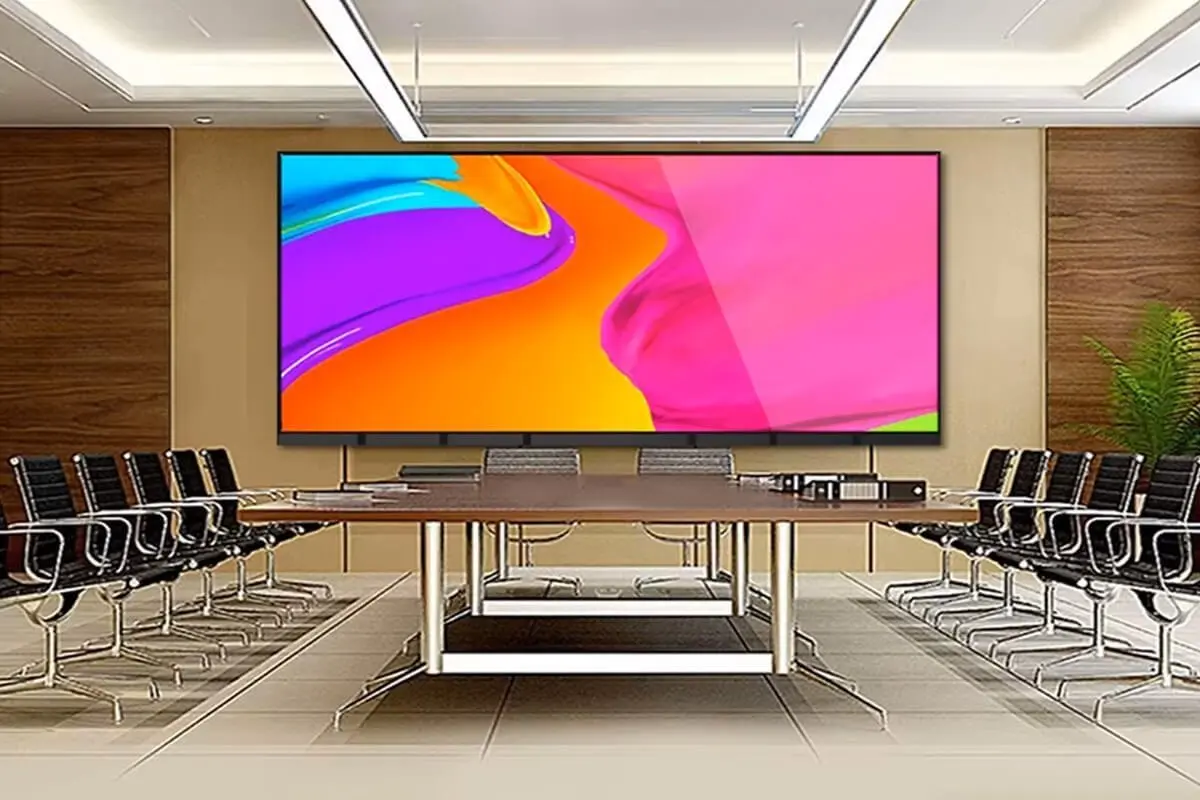
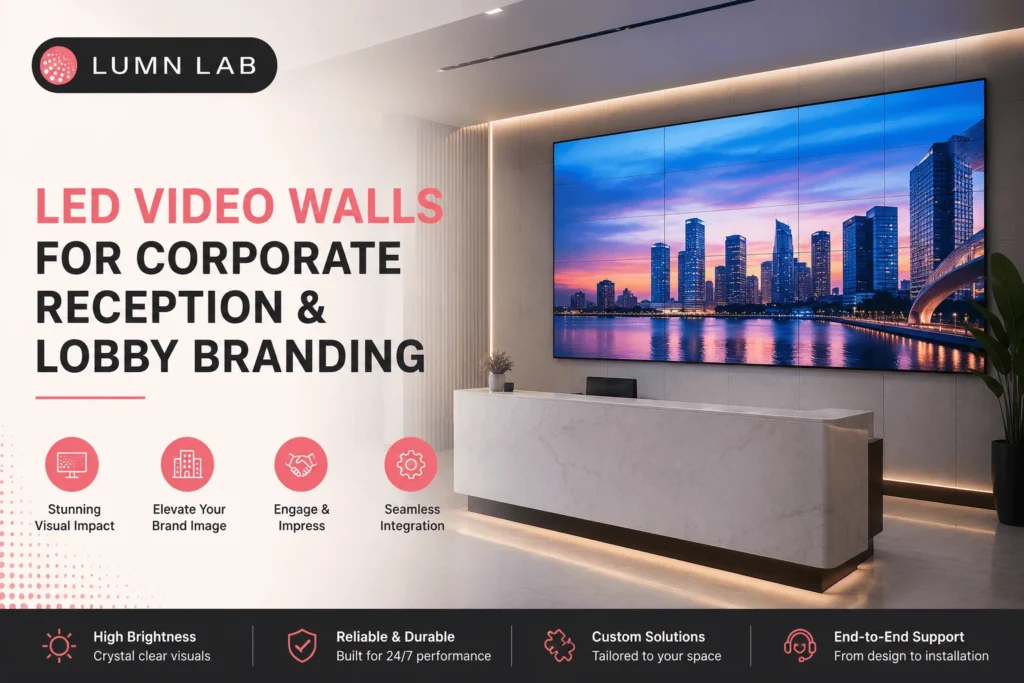

A visitor forms an opinion about your company in the first 15 seconds inside your lobby — before anyone says a word. A static logo on a wall says “we exist.” The LED video walls for corporate reception areas say “we invest in how we’re perceived.” That’s the real difference, and it’s why LED walls have replaced painted logo walls and framed posters in offices across Delhi NCR, Gurgaon, Noida, Mumbai, and Bangalore over the past few years.
This guide covers what actually matters when you’re planning one: pixel pitch, sizing, content strategy, cost ranges, and the questions most buyers get wrong the first time. Lumn Lab has installed reception and lobby displays for clients including Google, Vivo, and Air India, so this is written from what we’ve seen go right and wrong on-site — not from a product brochure.
Why Corporate Lobbies Are Moving to LED Video Walls
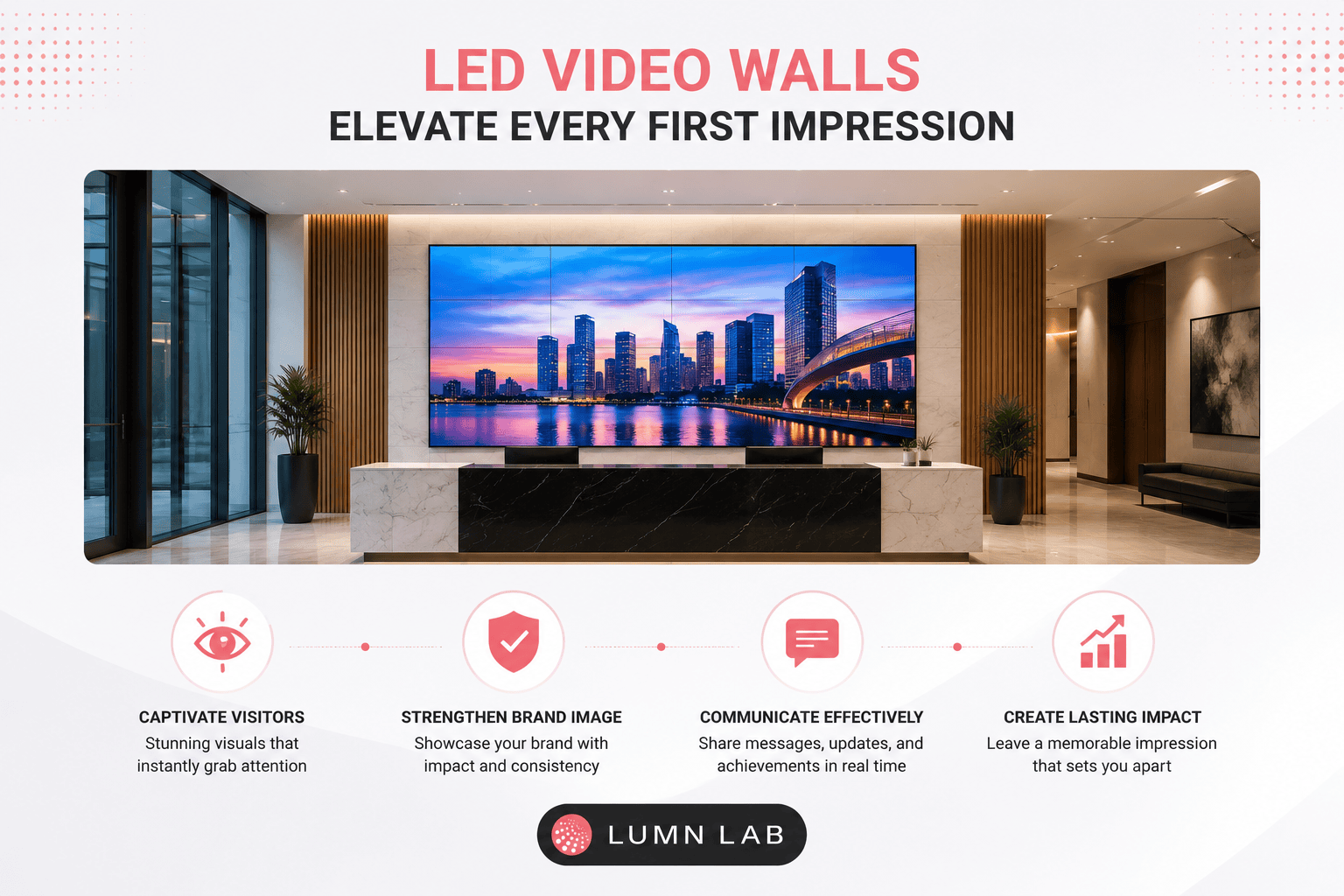
A reception LED wall does three jobs at once: it reinforces brand identity, it communicates in real time (welcome messages for visiting clients, live dashboards, event schedules), and it photographs well — which matters more than most companies admit, since lobby shots end up on LinkedIn, in press coverage, and in investor decks.
LCD video walls and static branding walls can’t match this. LCD panels show visible bezels between screens, which breaks the illusion of one continuous surface — a dealbreaker when the wall is the first thing a client sees. LED video walls are seamless, run brighter under lobby lighting, and last well beyond a typical office lease cycle when specified correctly.
This shift is part of a broader move toward corporate digital signage in lobbies and offices, where screens replace static signage with content that updates in real time.
How to Size an LED Video Wall for Your Reception Area
There’s no universal size. Sizing depends on three things:
- Viewing distance — how far the nearest seating or walkway is from the wall
- Wall dimensions — most lobbies work with a wall between 8 and 20 feet wide
- Ceiling height and lighting — high ceilings and glass facades need higher brightness to stay legible
As a working rule: for viewing distances under 3 metres (typical for a reception desk), keep the wall’s pixel pitch fine enough that individual LEDs disappear into a smooth image. Get this wrong and the wall looks pixelated up close, which undercuts the exact impression it was meant to create.
Choosing the Right Pixel Pitch for Close-Viewing Spaces
What is pixel pitch, and why does it matter for a lobby? Pixel pitch is the distance in millimetres between the centres of two adjacent LEDs. Smaller pitch means higher resolution and a smoother image at close range.
For corporate reception walls, where people stand or sit within a few metres:
- P1.2–P1.8: best for premium lobbies with viewing distances under 2 metres — highest cost, sharpest image
- P2.5: the most common choice for reception walls; balances cost and clarity for distances of 2–4 metres
- P3–P4: works for larger lobbies or atriums where the wall is viewed from further back
Outdoor-facing displays (building facades, entrance signage) use a different pitch and brightness spec entirely — don’t reuse an indoor spec for an outdoor wall or vice versa.
Content Ideas That Actually Work in a Lobby
Most lobby walls fail not because of the hardware but because nobody planned the content beyond day one. What holds up over time:
- Rotating brand films and company milestones
- Live visitor welcome messages (“Welcome, [Client Name]”) for scheduled meetings
- Real-time dashboards — sales numbers, sustainability metrics, project counts — for companies that want to signal transparency
- Event or town hall countdowns
- Client and partner logo carousels, useful when a company like yours regularly hosts vendor or investor meetings
Static content gets ignored within a week. Build a content calendar and a simple update workflow before installation, not after.
LED Video Wall vs LCD Video Wall vs Projection: Which Fits a Lobby?
| Factor | LED Video Wall | LCD Video Wall | Projection |
| Seams/bezels | None | Visible between panels | None, but soft edges |
| Brightness in daylight lobbies | High, holds up against glass facades | Moderate, washes out in bright light | Poor, needs dim ambient light |
| Custom shapes (curved, cylindrical) | Possible | Limited | Not practical |
| Long-term running cost | Lower over 5+ years | Higher panel replacement cost | Bulb replacement, lower lifespan |
| Best fit | Premium reception, branding-first lobbies | Budget-conscious, smaller walls | Rarely used for lobbies today |
For a corporate reception area, LED is the default choice among the companies we work with — LCD gets picked mainly on tighter budgets, and projection has largely fallen out of use for this application.
Cost of a Corporate Lobby LED Video Wall in India
Pricing depends on pixel pitch, wall size, and control system. As a market-range estimate for indoor fine-pitch reception walls in India:
- Entry-level (P3–P4, smaller wall): lower end of the market
- Mid-range (P2.5, standard lobby size): most common corporate spend bracket
- Premium (P1.2–P1.8, large format or curved): top end, typically for flagship offices or headquarters
These are directional ranges, not quotes — actual pricing depends on your wall dimensions, content management needs, and site conditions. Get a site-specific quote before budgeting.
Installation and Maintenance: What to Expect
Installation for a standard lobby wall typically runs a few days to under two weeks, depending on structural work (mounting frame, electrical routing, content management system setup). Lumn Lab has handled 1,000+ installations since 2015 across corporate, retail, and event environments, and the most common delay isn’t the LED wall itself — it’s unplanned electrical or structural prep that wasn’t scoped upfront.
Maintenance for indoor lobby walls is lighter than outdoor installations: periodic dust cleaning, firmware updates, and an annual maintenance contract (AMC) that covers module replacement if a diode fails. Ask your vendor what’s covered under AMC before signing — module cost, labour, and response time vary widely between providers.
Conclusion
A corporate lobby LED video wall does more than decorate a wall — it’s the first impression your company controls completely, from the moment a client walks in. Getting there right means matching pixel pitch to viewing distance, planning content before hardware, and choosing a vendor who understands AMC economics, not just installation.
Lumn Lab has delivered 1,000+ LED display installations since 2015, working with clients across Delhi NCR, Gurgaon, Noida, Mumbai, and Bangalore — including corporate lobbies for brands like Google, Vivo, and Air India. If you’re planning a reception or lobby display, get in touch with Lumn Lab for a site assessment and a quote based on your actual space, not a generic estimate.
Frequently Asked Questions
Q. What is an LED video wall used for in a corporate lobby?
It’s used for brand display, real-time visitor welcome messages, company updates, and reinforcing corporate identity at the first point of client contact.
Q. How much does a corporate lobby LED video wall cost in India?
Cost depends on pixel pitch and wall size; it varies by project. Treat any number online as a starting estimate and get a site-specific quote.
Q. What pixel pitch is best for a reception area?
P2.5 is the most common choice for typical viewing distances of 2–4 metres. Closer viewing distances need finer pitch like P1.2–P1.8.
Q. How long does installation take?
A standard lobby wall typically takes a few days to under two weeks, depending on structural and electrical prep.
Q. Can lobby LED wall content be updated remotely?
Yes. Most systems use cloud-based content management software, so marketing or facilities teams can update messaging without an on-site visit.
Q. Do LED video walls need a lot of maintenance?
Indoor walls need periodic cleaning and firmware updates. An AMC typically covers module replacement — check what’s included before signing.
Q. What’s the difference between an LED video wall and an LCD video wall for a lobby?
LED walls have no visible bezels and perform better in bright, glass-facade lobbies. LCD walls have seams and are more budget-friendly for smaller spaces.
Q. Can an LED video wall be curved or custom-shaped for a lobby?
Yes, LED modules can be configured into curved, cylindrical, or irregular shapes, which LCD and projection setups can’t easily replicate.
Keep Reading