


If you’ve shopped for a new phone, TV, or smartwatch recently, you’ve likely seen the term OLED display on the spec sheet, usually next to a higher price tag. But what does it actually mean, and is it always the right choice?
OLED, short for organic light-emitting diode, is a display technology built around pixels that produce their own light, with no backlight layer behind them. That single design difference is responsible for the deep blacks, thin panels, and vivid colors OLED is known for. It’s also why OLED isn’t the default choice for every application, including large commercial displays, where a different technology, LED, tends to take over. This guide breaks down how OLED display technology works, where it shows up in everyday life, and where its limits are.
What Is an OLED Display?
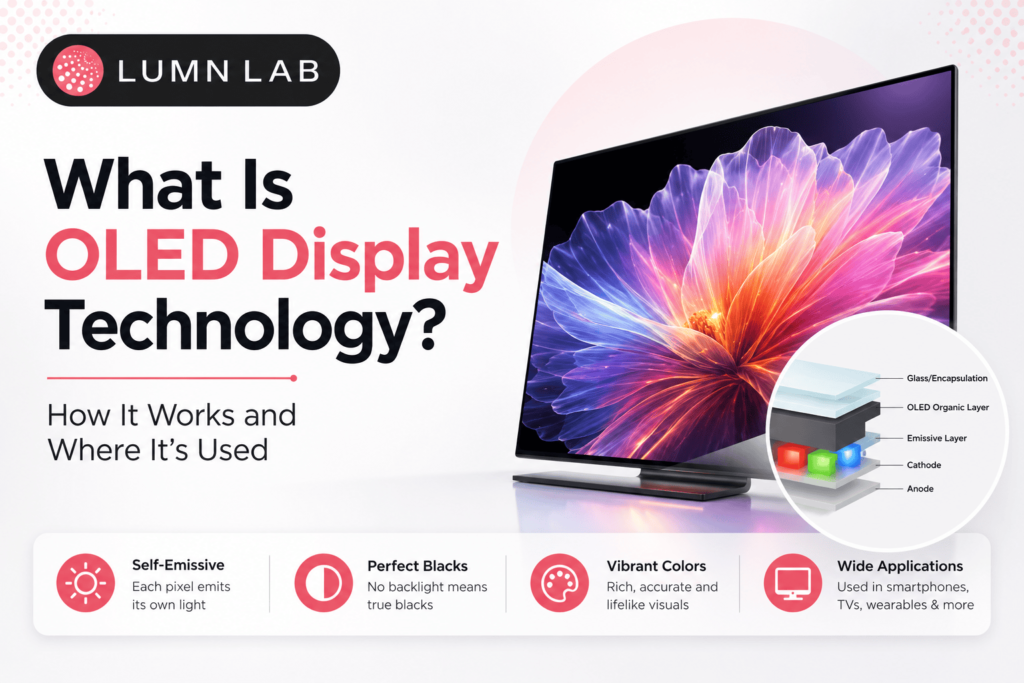
An OLED display is a screen made of organic compounds that emit light directly when an electric current passes through them. Unlike LCD screens, OLED panels don’t rely on a separate backlight; each pixel switches on, off, and adjusts brightness on its own.
- Self-emissive pixels – no shared backlight layer
- Thinner, lighter panel construction than backlit displays
- True black when a pixel is switched off completely
- Can be manufactured on flexible or curved substrates
How Does OLED Display Technology Work?
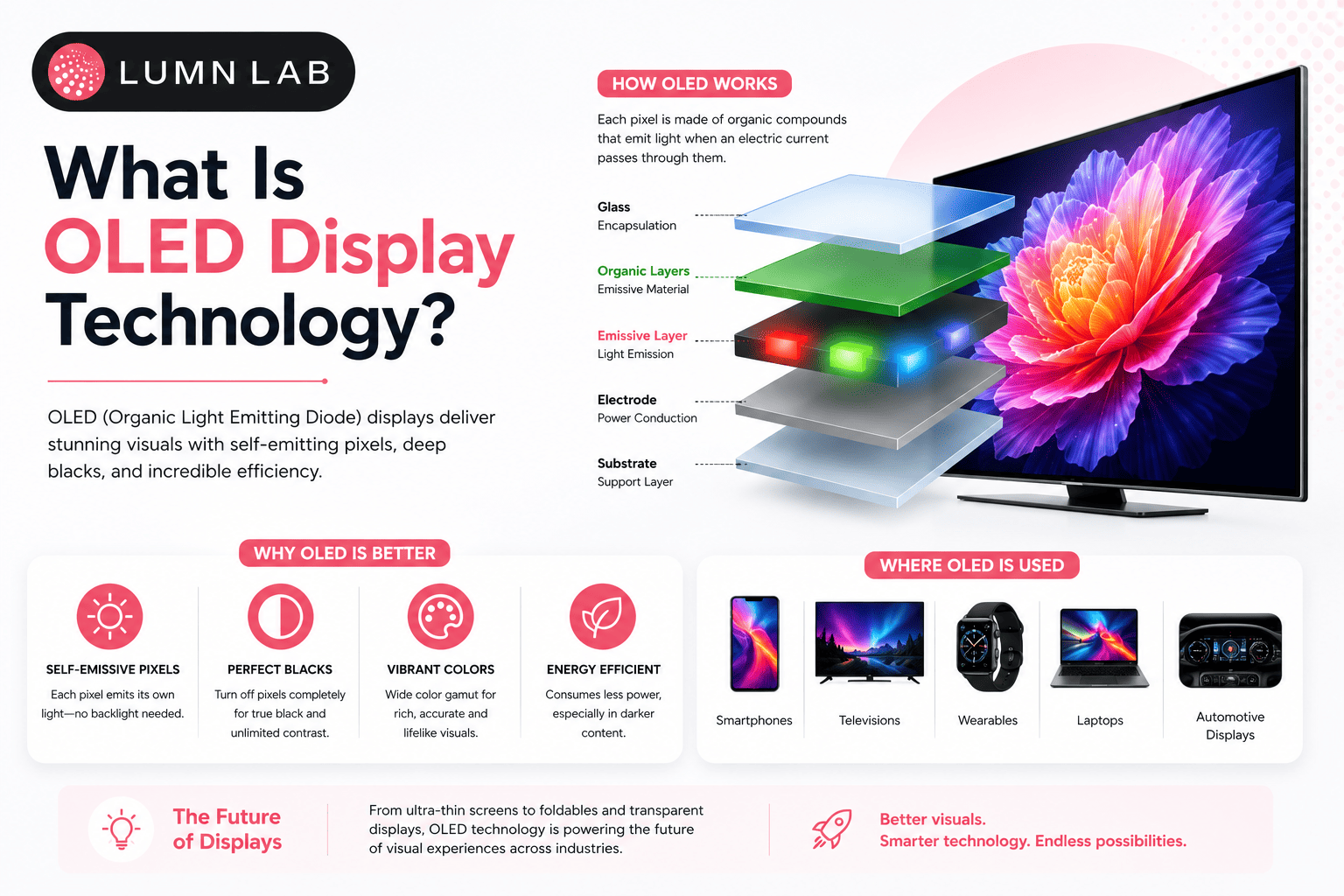
An OLED panel is built from several thin layers stacked on a glass or plastic substrate: a cathode, one or more organic emissive layers, a conductive layer, and an anode. When electric current runs through the organic layer, electrons and “holes” meet and release energy as light. Different organic compounds are used for the red, green, and blue sub-pixels that make up each pixel.
Because every pixel is its own light source, the display doesn’t need to block or filter light from a backlight the way an LCD does. This is what gives OLED its instant response time and its ability to switch a single pixel fully off, producing genuine black rather than a dimmed grey.
Key Characteristics of OLED Displays
- Perfect blacks and high contrast, since unused pixels draw no light
- Wide viewing angles with minimal color or brightness shift
- Fast pixel response time, useful for fast-motion content and gaming
- Thin, lightweight builds; some panels can flex or curve
- Lower power draw on dark content, higher draw on bright, white-heavy content
- Prone to burn-in when static images stay on screen for long periods
- Lower maximum brightness than high-output LED, which limits outdoor use
Also Read: LED Display Price in India 2026: Complete Cost Guide
Where Is OLED Display Technology Used?
OLED has become the standard for premium personal electronics, where screen size is small and viewing distance is close:
- Flagship smartphones and tablets
- Smartwatches and wearables
- Premium laptop and monitor screens
- Home television sets
- Camera viewfinders
- Medical imaging monitors, where color accuracy is critical
- Small indoor kiosk and point-of-sale screens
What OLED isn’t built for is large-format, outdoor, or always-on commercial signage. Panels are manufactured at fixed sizes, so there’s no way to tile multiple OLED units into a 20-foot video wall the way you can with modular LED. That gap is exactly where LED display technology takes over for businesses, event organizers, and advertisers.
OLED vs LED Display: What’s the Difference?
Both technologies use light-emitting diodes at the pixel level, which is where some of the naming confusion comes from. The difference is in how that light is produced and what each format is engineered to do:
| Aspect | OLED Display | LED Display |
| Light source | Organic compound, self-emissive per pixel | Inorganic LED chips |
| Best suited for | Phones, TVs, wearables, small screens | Billboards, video walls, stadiums, signage |
| Outdoor brightness | Limited; not built for direct sunlight | Engineered for high outdoor visibility |
| Size scalability | Fixed manufactured panel sizes | Modular; scales to any size or shape |
| 24/7 commercial use | Burn-in risk with static content | Built for continuous operation |
| Weather resistance | Indoor use only | Outdoor-rated (IP65+) options available |
Which Is Better for Commercial and Large-Format Displays – OLED or LED?
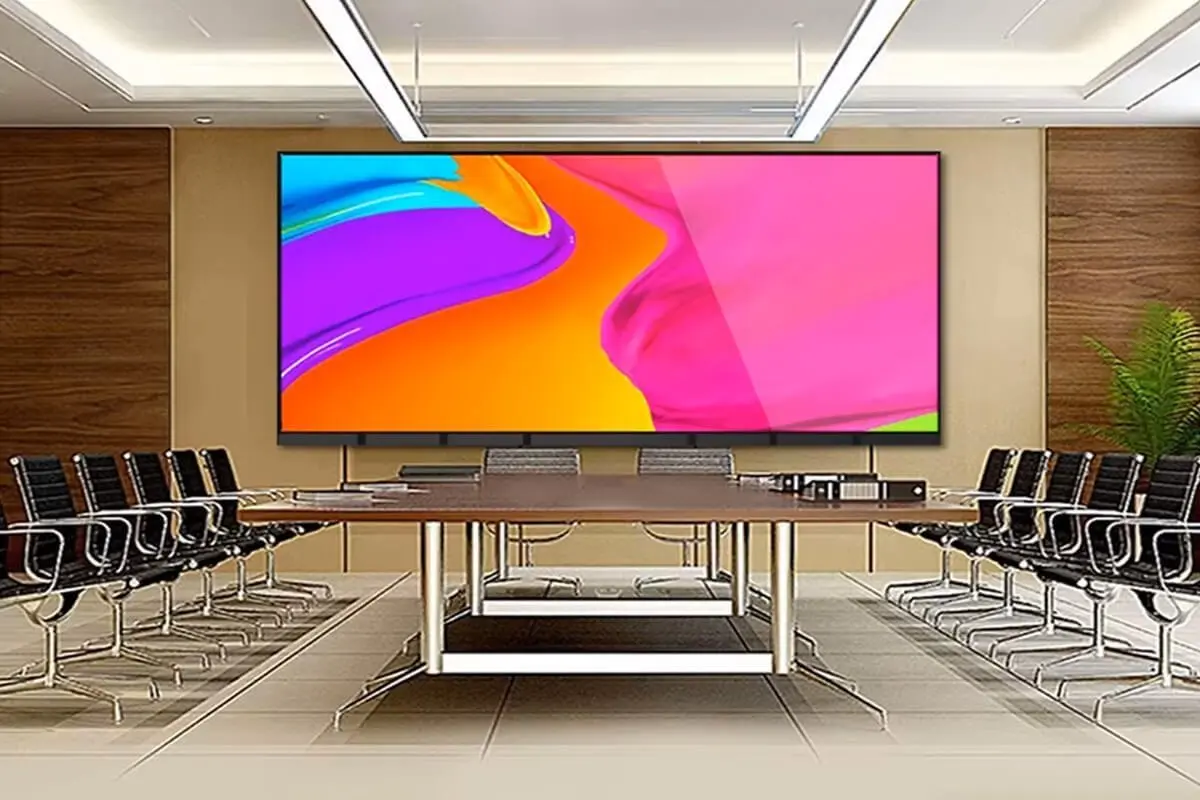
For anything beyond a single personal screen — a lobby video wall, an outdoor hoarding, a stadium display, or a retail storefront — LED display technology is the practical choice. LED panels are modular, so a display can be built to almost any size or shape by adding panels. They’re also engineered to survive direct sunlight, monsoon humidity, and years of continuous operation, none of which OLED panels are designed to handle at that scale.
If your next project needs a video wall, storefront display, or outdoor screen in Delhi, Noida, Gurgaon, Mumbai, or Bangalore, Lumn Lab’s team can help you choose the right pixel pitch and configuration for your space and budget.
Conclusion
OLED display technology answers a specific need: sharp, high-contrast, compact screens for personal devices. It’s the right call for a phone or a TV. It’s the wrong call the moment a project moves to large-format, outdoor, or 24/7 commercial display, where LED is purpose-built for the job.
Lumn Lab has been designing, manufacturing, and installing LED display solutions across India since 2015, with 1,000+ successful installations spanning corporate, retail, events, government, and hospitality projects. If you’re planning a video wall, storefront display, or outdoor screen, get in touch with Lumn Lab for a free consultation and quote.
Frequently Asked Questions
Q. What does OLED stand for?
OLED stands for organic light-emitting diode, a display technology in which each pixel produces its own light using organic compounds.
Q. Is OLED better than LED?
Neither is universally better; it depends on the use case. OLED suits small, indoor screens like phones and TVs, where color accuracy and contrast matter most. LED suits large-format, outdoor, and commercial displays that need high brightness, durability, and scalability.
Q. Does OLED get screen burn-in?
Yes. Because OLED pixels age individually, static images left on screen for extended periods can cause visible ghosting or discoloration known as burn-in. The risk increases with continuous, 24/7 use of the kind common in commercial signage.
Q. Can OLED be used for outdoor advertising or billboards?
Not practically. OLED panels aren’t built to handle direct sunlight, weather exposure, or the continuous brightness demands of outdoor advertising. LED display technology, engineered with weatherproof housings and high-nit output, is the industry standard for outdoor signage.
Q. What is the difference between OLED and LCD?
LCD panels use a backlight shining through liquid crystals to produce an image. OLED panels skip the backlight entirely; each pixel produces its own light, resulting in deeper blacks and thinner screens.
Q. How long do OLED displays last?
With normal consumer use, OLED panels typically last several years, in line with other electronics. Lifespan drops under continuous, high-brightness, static-image use, the kind of demand common in commercial and signage applications.
Q. Are OLED displays energy efficient?
OLED can be more energy-efficient than LCD when showing dark content, since black pixels draw no power. Bright or white-heavy content increases power draw, since every pixel is individually lit.
Q. What’s the best display technology for a large video wall?
For large-format video walls, LED display technology is the industry standard. It offers seamless scalability, high brightness for varied lighting conditions, and durability for continuous commercial operation that fixed-size OLED panels cannot match.
Keep Reading